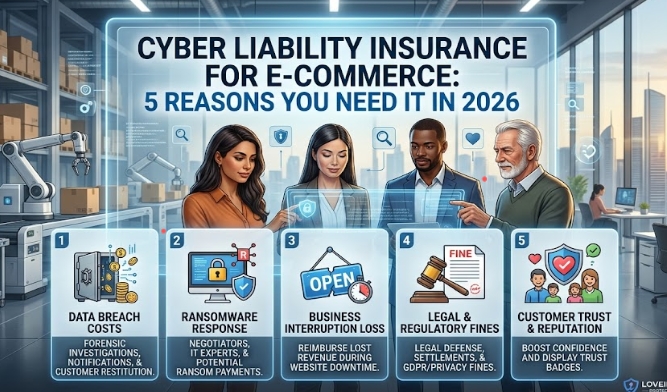
Cyber Liability Insurance for E-commerce: 5 Reasons You Need It in 2026
The digital frontier offers limitless opportunities, but it also brings unprecedented risks. In the modern business landscape, your storefront isn’t made of glass and brick; it is made of code, payment gateways, and customer databases. Whether you are selling downloadable design patterns, launching a private label consumer brand, or dropshipping physical goods, your most valuable asset is your digital infrastructure.
But what happens when that infrastructure is compromised? A single data breach or ransomware attack can devastate your brand’s reputation and drain your bank account. This is exactly why cyber liability insurance for e-commerce has shifted from a “nice-to-have” luxury to an absolute necessity in 2026.
At LoveInsurance.biz, we combine legal insight with real-world digital business experience to help you protect your assets. Let’s dive into what this insurance actually covers and why your online store needs it immediately.
1. What is Cyber Liability Insurance for E-commerce?
In simple terms, cyber liability insurance protects your online business from the financial fallout of cyberattacks, data breaches, and other digital threats. While standard general liability insurance (which we discussed in Is General Liability Insurance Tax Deductible) covers physical accidents, it completely ignores the digital realm.
If a hacker steals your customers’ credit card information or a virus shuts down your checkout page during the busiest shopping weekend of the year, a cyber liability policy steps in to cover the costs of recovery, legal fees, and customer restitution.
2. The 5 Critical Reasons You Need It Now
If you think your online store is “too small” to be targeted, think again. Hackers often use automated bots to find vulnerabilities in small to medium-sized websites precisely because they have less security than major corporations. Here are five reasons you need to get covered:
Reason 1: The High Cost of Data Breaches If your customer database is hacked, you are legally obligated to notify the affected individuals. The costs of forensic investigations to find the leak, sending out notifications, and offering credit monitoring services to your customers can easily bankrupt a small business. Cyber insurance covers these exact expenses.
Reason 2: Ransomware Attacks Are Evolving Ransomware occurs when malicious software locks you out of your own website or database until you pay a hefty fee. In 2026, these attacks are more sophisticated than ever. A robust cyber policy not only covers the cost of hiring negotiators and IT experts to unlock your system but, in some cases, can even cover the ransom payment itself.
Reason 3: Business Interruption Loss Imagine your website goes down for a week due to a Distributed Denial of Service (DDoS) attack. You aren’t just dealing with IT costs; you are losing a week’s worth of revenue. The best cyber liability insurance for e-commerce policies include business interruption coverage, reimbursing you for the income you lost while your digital doors were forced shut.
Reason 4: Legal and Regulatory Fines Governments worldwide are cracking down on data privacy. If you mishandle customer data or fail to secure your website properly, you could face massive fines from regulatory bodies (such as GDPR in Europe or various state laws in the US). Furthermore, customers whose data was stolen might sue you. Cyber insurance helps cover your legal defense and potential settlements.
Reason 5: Building Trust with Your Audience In an era where consumers are highly skeptical about where they enter their credit card details, security is a selling point. By having comprehensive insurance and robust security measures, you can confidently display trust badges on your site. Customers are more likely to buy from a brand that takes their digital safety seriously.
3. First-Party vs. Third-Party Coverage
When shopping for a policy, you will encounter two main types of coverage. You generally need both:
-
First-Party Coverage: This pays for your direct expenses. It covers the costs to repair your software, recover lost data, and notify your customers.
-
Third-Party Coverage: This protects you if someone else sues you. For example, if a client claims your negligence allowed their sensitive data to be stolen, this covers your legal defense and court payouts.
4. How to Lower Your Premiums
Insurance companies assess your risk before giving you a price. As a digital entrepreneur, you can lower your premiums by proving you are a low-risk client. Implementing strong security protocols—such as two-factor authentication (2FA) for all admin accounts, regular automated backups, and using secure, updated payment gateways—will make your business much more attractive to insurers.
5. The Connection to Other Business Insurances
It is vital to remember that cyber insurance does not replace your other policies. It works in tandem with them. For example, if you rely heavily on a specific business partner or lead developer to maintain your site’s security infrastructure, you should also be looking into Key Person Life Insurance for Small Business to ensure your operations survive if they unexpectedly pass away.
Conclusion: Protecting Your Digital Storefront
You spend countless hours optimizing your SEO, sourcing products, and driving traffic to your store. Do not leave that hard work exposed to a single line of malicious code. Cyber liability insurance for e-commerce is the modern equivalent of putting a deadbolt on your front door. It ensures that when the unexpected happens, your business has the financial backing to recover, rebuild, and continue growing.

Lead Researcher & Founder at LoveInsurance.biz. With an academic background in law (class of 2017), Nicolas specializes in deconstructing complex contract clauses and insurance policies, transforming legal jargon into clear, actionable advice for everyday consumers.