Do You Need Vacant Land Insurance? A Complete Guide for Landowners
You own a piece of empty land. There’s no house, no garage, not even a shed—just trees, rocks, or empty pasture. So, you don’t need insurance for it, right? Why would you pay to insure empty dirt?
This is one of the most common—and potentially costly—mistakes a property owner can make. While you don’t have a structure to protect from fire or hail, your financial risk is very real. That risk isn’t about the land itself; it’s about liability. This guide will explain why vacant land insurance is a vital layer of protection for almost any landowner.
The #1 Risk: Landowner Liability
When you own property, you are legally responsible for what happens on it. This legal concept is called “landowner liability” or “premises liability.”
Many owners assume that if someone trespasses on their property and gets hurt, it’s their own fault. Unfortunately, the law is far more complicated. Courts have consistently ruled that property owners have a “duty of care” to ensure their property doesn’t pose an unreasonable danger to others—even, in many cases, to uninvited guests.
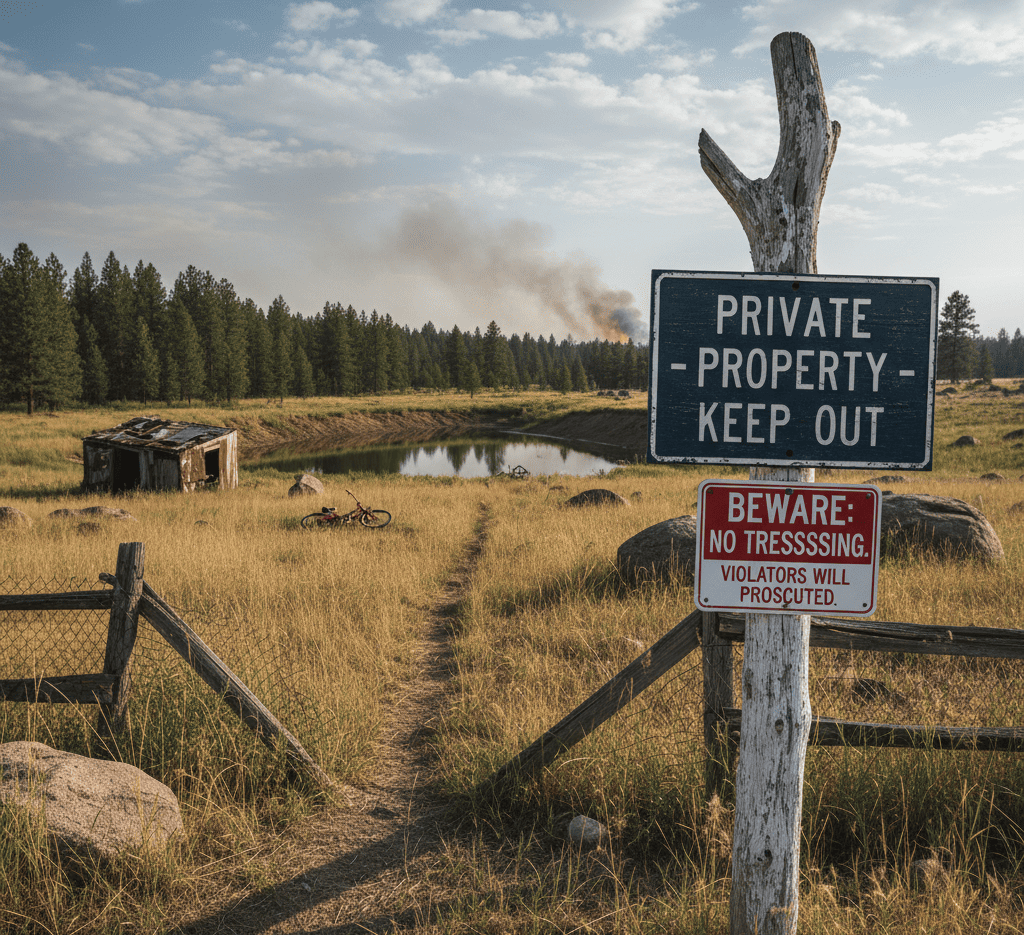
This is especially true for children. If your land has anything that could be considered an “attractive nuisance”—like an old well, a pond, a steep hill, or even just abandoned equipment—you could be held financially responsible if a child trespasses and is injured.
Consider these common, real-world scenarios:
- A Hiker Trespasses: A person decides to take a shortcut across your land, steps in a gopher hole, and breaks their ankle. They sue you for their medical bills and lost wages, claiming you failed to maintain the property.
- An “Attractive Nuisance”: A neighborhood teen is injured while exploring an old, dilapidated fence or shed on your property.
- A Spreading Fire: Kids build a small bonfire on your land that gets out of control and spreads, damaging your neighbor’s property. Your neighbor sues you for the damages.
- Illegal Dumping: Someone dumps hazardous waste on your property without your knowledge. It leaks into the local groundwater, and you are faced with a lawsuit and massive, mandated cleanup costs.
In all of these cases, you would be forced to hire a lawyer and defend yourself in court. A liability insurance for vacant land policy is what protects you from these situations.
What Does Vacant Land Insurance Actually Cover?
This is where the distinction is crucial. Unlike homeowners insurance, the primary purpose of this policy isn’t to protect the “thing” itself, but to protect you from lawsuits.
1. Liability Coverage (The Main Protection)
This is the non-negotiable part of the policy and the core reason you buy it. If someone is injured on your property and sues you, this coverage will pay for:
- Legal Defense Costs: Your insurance company will hire and pay for a lawyer to defend you in court, even if the lawsuit is frivolous.
- Medical Payments: It can cover the medical bills of the person injured on your property, often without a lawsuit even being filed.
- Judgments and Settlements: If you are found liable, the policy will pay the settlement or court-ordered judgment up to your policy limit (which is often $1,000,000 or more).
Without this coverage, you would have to pay all of these costs out of your own pocket, putting your savings, your home, and your future earnings at risk.
2. Property Coverage (Optional)
This is a less common and secondary part of the policy, which you can often add if needed. It covers damage to your property. This might include:
- Fire: Pays for damage from a wildfire.
- Vandalism: Pays to repair a fence, gate, or other structure that was intentionally damaged.
- Theft: Covers stolen items, such as timber (if specified) or a pump from a well.
Most landowners are less concerned with this, as the land itself is hard to “destroy,” but it can be valuable if you have fences, sheds, or valuable timber on the property.
How Much Does Vacant Land Insurance Cost?
This is the best part: because there is no house to rebuild, vacant land insurance is generally very affordable.
While every policy is different, many landowners can get a $1 million liability policy for just a few hundred dollars per year. The final cost of vacant land insurance will depend on a few key factors:
- Acreage: A larger piece of land has more risk and will cost more to insure.
- Location: Land in a more populated, suburban area (with more potential for trespassers) will cost more than a remote, inaccessible plot.
- Hazards: Does the land have a pond, lake, river, or steep cliffs? Any “attractive nuisance” will increase the cost.
- Public Access: Is the land fenced off, or is it open and frequently used by the public for hiking or ATV riding?
- Coverage Amount: A $2 million policy will, of course, cost more than a $1 million policy.
Do I Really Need This? (Who is at Highest Risk?)
So, is vacant land insurance necessary for everyone? While the risk is never zero, it’s a critical purchase for some and a “should-have” for almost everyone else.
You definitely need this policy if:
- Your vacant land is in or near a suburban or populated area.
- Your property is easily accessible from a road or abuts other properties.
- You are aware that people (invited or not) use your land for any reason (hiking, hunting, ATVs, cutting through).
- Your land has any “attractive nuisance” (a pond, stream, old structure, gravel pit, etc.).
- You plan to sell the land in the near future (a potential buyer will want to see that the property is responsibly managed).
You might be able to add this coverage to an existing policy if:
- The vacant plot is small and directly adjacent to your primary home. You may be able to add it to your existing homeowners insurance as an “endorsement.” Ask your agent about this.
Even if your land is remote and completely inaccessible, the risk is not zero. A fire could start on your property and spread, or a hunter could wander onto it and be injured. For the low annual cost, it’s rarely worth the risk to go without it.
Conclusion
Owning land, even “empty” land, comes with significant legal risks that are easy to overlook. A low-cost vacant land insurance policy isn’t just protecting the dirt; it’s protecting your entire financial future from a single lawsuit that could cost you hundreds of thousands of dollars.
For the low annual cost, vacant land insurance is a necessary investment for most landowners. It provides peace of mind and ensures that your asset doesn’t become your biggest liability.